Category Archives: Tips

How I Use Plottr to Outline My Stories

Please note some of these links are affiliate links. If you buy the product, I will receive some percentage of the sale but at NO additional cost to you. I only vouch for products I either LOVE or USE in my own life. Thank you.


Introduction

In 2019, I was lucky enough to be one of the first people who knew about Plottr. I was there in 2021 for their big update. And to this day, I still use the software Plottr to outline my stories and series.


What is Plottr?


Official Plottr Black Logo


Plottr is a subscription-based software (now app as well) that allows you to outline both novels and series, as well as to keep track of your characters’ timelines and items, locations, and much more.

You can check it out here.


How do I Use It?


Plottr Square Banner V2


Well, first of all, I found a “trick” to outline any type of stories I want. Screenplay? Sure! Comic book? No problem! Novels? Absolutely!

But how?

Let me tell you something first: When I started using Plottr, I had trouble making sense of how to actually outline the whole book and the characters’ timelines in something cohesive and intuitive directly into the software. But at the same time, I was deep into studying the Save the Cat method for both my screenwriting (Daphné and Philip) and other stories.

You can see where I’m going with this, huh?

So, one day, I figured “Why not?” and began creating “Chapters” with the beats’ names—this way I knew where to head to and which beat to hit next. Then, I created scenes to expand the chapters. I got through a lot of my Rise of a Heroine story like this!

Nowadays, you can purchase the Save the Cat method in Plottr as an add-on. While I do have it, I prefer creating my own. It suits me better and I can tweak it like I want; however, theirs is an excellent resource and/or starting point to customize your own.

I am now outlining the whole series of Rise of a Heroine (you can add covers to the books in your series in Plottr! Neat!), a comic book, and a novella.

Anything is possible!

As long as it’s for plotting and outlining. Otherwise, you might be at the wrong place…


In Conclusion

Plottr is definitely one of my top softwares to work with as an author/writer—and it was right from the start. Sometimes, it just needs a bit of customization to really grasp the tool, but once you do, you’ll get a-plotting with Plottr in no time!

Don’t forget to check it out here for more info: Plottr

See you next post, lovelies!

Screenwriting Tip: Fear and How to Beat It

IMG_5625


Cue Taylor Swift's Anti-Hero song


Yesterday, I was suddenly motivated and determined to keep on writing my short film for the first time in two weeks. When I sat down with an iced coffee in front of my Macbook Air, then page to my Arc Studio Pro's project at the ready, I felt dread blooming and I thought for no apparent reason:


"I see, so that's why I haven't been writing. I still shouldn't write it because I'm afraid–"

And, I shit you not, I immediatly reacted to this thought with:


"Oh noooo, not YOU again!"

The fear!


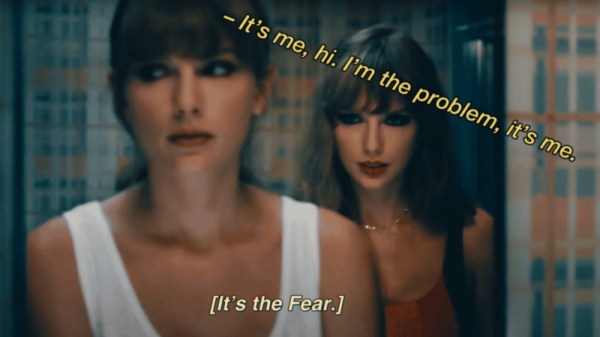
And then I burst out laughing as I remembered the scene in Swift's music video when she opens the door and sees… herself!


I pictured the same scene with me and my fear, where she waves and smiles at me and says the brilliant lyrics:


"It's me, hi. I'm the problem, it's me."


Because, yeah, she's damn right! My fear is the problem.

My fear of succeeding, of not being good enough (or at all!), of failing, of others' mean critics, of being laughed at, of… You see?


This, this fear, is my problem in writing.

What is yours?


It can be the same as me, or it can be writer's block, lack of self-esteem, deeply-rooted negative opinions of yourself or constant exhaustion…

But if it's the fear, please keep on reading.


I then realized that whatever I'd do, no matter how hard I slammed the door to Fear's face, shouted at her, pulled at my hair, cried myself to a puddle, or–gasps!–listened to her… The Fear would always be there. She'd stay around. Like a nosy someone.

She'd hover over my shoulder, making me feel afraid and doubt myself.

But you know what?

She would win… only if I let her.

I'm the one in control.

I'm the writer.


She's only real if I let her.

Just like a story, and a bad one at that…


And so, what did I do after picturing this scene and laughing?

I took a sip of my iced coffee and kept on writing. And I made progress.

I keep on writing and making progress even now.


Okay, sure, Fear is annoying.

But now I don't let her write my story.


Instead, I suggest you do this when she shows up at your doorstep:


  • Open the door, and smile
  • Invite her in calmly
  • Tell her: you can sit or hover, but I've got writing to do.
  • Sit down and write.
  • When she makes you afraid, tell her you know she's there, but she's fictional, too…
  • Then say, proudly: 


"And I'm the writer after all."


I hope this bit of life helps you!

It sure did spur me into action and yes, I do the suggestion I gave you now, and yes, I keep on writing. 🙂


She's not invincible, the fear. She just wants you to think she is. 


See you next post, darlings!

Halfway Through, A Writing Tip, and A New Focus

WOW, guys and gals!

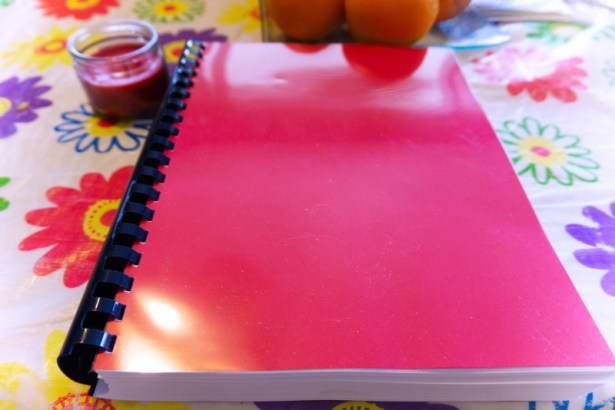
Guess what I reached last week? That's right, 50% of my novel Rise of a Heroine: Resurgence! I'M AT 50%!!! HALFWAY THROUGH! I might not be done with it, but I count this as a big win. It's the farthest I ever got in a novel of mine, so this is huge. But also quite motivating and humbling, since it's proof of how I can succeed at this. I'm longing for the first draft. Speaking of draft, here's a picture of my thick baby printed out (of course, it's half of it since that's what I got but still it's pretty good, right?):

Thick Book(Copyrighted by Catherine Girard-Veilleux, 2020)

Honestly, this book baby of mine is ENORMOUS. It has 294 pages, imagine that! Need I remind you that's only… half of it?!

Here's the awesome cover my best friend made for me on Inkitt: 

Miranda1

You can read the first 8 chapters here, too.

I always use Staples to print my books (or my progress at least) and I love their services. It's always ready in a day no matter how long or thick my document might be.

I prefer to print it out to edit it so I can see it better. But the truth is I hate to concentrate and narrow my eyes at the screen when revising; I prefer to hold the pages in my hands, and feel the book-in-the-making, you know? So it makes it more authentic, more real to me. But funny story is that due to its thickness, the rings for the binding I wanted weren't available; they were too small! So I had to pick my least favorite option, which is the ugly and large black plastic binding. Talk about chic… Anyways, at least I could choose a red cover. I don't know why but red always makes me think of Miranda Kane, probably because she's a boxing athlete and most boxing gloves are red. Or because she's fierce so red fits her. Either way, I'm glad I could get the red cover and the protective transparent cover. 

Now, why would it need editing since it's halfway through? Well, I've noticed a few anomalies in how boxing works, mostly for students. I had a kind and generous interview with the head/director of the Fédération québécoise de boxe olympique, which is the reference in Québec. I thank him immensely for that. He informed me about how things worked and even used Miranda and her story as an example to describe her path. He was amazing and so understanding! Thanks to him, I now have essential information about the female boxing world and in general. So, due to these discrepancies, I decided to go over the half book I wrote and revised, fixing a few chapters and inconsistencies with the reality. Then, and only then, will I be able to go forth and write more realistically. Because something big is coming for Miranda Kane, and I have to be ready too, you know? 

I have a strange way of writing books (which I'll make a post about), but in general, I write the story, then at a point when it feels critical and I'm moving through quicksand, I stop writing for weeks and do research instead about what's not coming qwell too me in the writing, so I do interviews and read documentaries (even watch a few!) and so on. But while I like to be familiar with the topic when I start writing, it's never to a deep point, it's on the surface. And when I can't go forward anymore, that's when I take a step back and do research. I found it helps me see more potential for a story and even gives me more excitement as I find so many new avenues for the story to go. Okay, it might cause more rewriting, of course, but overall, it doesn't bog me down in the beginning and prevent me from going ahead with the writing for fear of not knowing never never never enough. So many people stay in the research stage out of fear of committing to writing. Research is fun, don't get me wrong, I love research. But I prefer writing my stories. So I hit a compromise: write a certain percentage of the story and when I can't go on anymore because too many details elude me, then do research, and dig deep! Then with a better view of it all, come back and win!! Write it all in a fury with a deep passion like fire is after me. Because I'm so happy I get a better grip on the details and on the story world.

So, while unusual and risky, that's exactly how I do it. And so far it's going well, I went farther than any other novel I started. So I'll keep it, thank you very much.

By the way, I decided to focus my blog, Ad Librum Aeternam, more on my writing journey and writing tips because I feel I've got tips to give now being halfway through my novel, which is more than some achieve. I have two series of posts coming up as well: one is on writing comics and the second is on screenwriting. I think there's not enough free resources about these two fields and since I love them and am writing in them in my spare time, I figured we could go on these two journeys together. Of course, writing novels, short stories and flash fiction stay the main focus of my blog. Expect more writing tips along the way! 

I can't wait to share with you  what I learned so far!

How Being a Book Reviewer Will Help You As An Author

Girly Going Away Party Blog Graphic

Introduction

When I started as a book reviewer eight years ago, I never expected it to get this big nor the greatly positive surprises it would come with. But the most important thing I’ve learned is how the publishing world works while being one of its gears.

I will show you what I learned and how being a book reviewer will help you on your path to becoming a published author. Because what’s better than knowing how it works from the inside and helping others succeed at the same time?

Be prepared to work a lot AND have fun while making friends or partners. I’ve learned so much and I am still enjoying the path I’m on, discovering new things and concepts. I promise, being a book reviewer will help you as an author. But it doesn’t happen overnight, you need to put in the work and the enthusiasm and diligence.

I’m sure you’ll find the rewards are more than worth it, though.


 You will forge good and lovely relationships with authors

This is a bonus I never expected, but I am so grateful for. It’s heart-warming just to think about all the good relationships I made with authors. I started out on OnlineBookClub where authors can actually interact with our reviews. Afterwards, whenever I published a high-rating review of mine, I went and searched for the author on Twitter. And then I sent tweets to them along with DMs (when allowed) so as to tell them I’d be willing to read more of them and sending them personally the links to my review.

After a while, I noticed a few authors kept interacting with me, even on Instagram! It seemed we liked each other as people in the same business. I love being Internet-close with them because there’s a kinship and respect you don’t get from just posting your reviews.

I was given a great gift by reviewing them: friendship.

Notably, with these charming ladies and fellow:

  • Catherine Kopf (author of one of the most unique stories I know, The Breaking Order series)
  • J. M. Sullivan (author of one of my favourite retellings, The Transmissions Series). Read my review of Second Star here.
  • Chris Babu (author of one of my few favourite dystopian stories, The Initiation Series, and whom I also had great fun interviewing ). Read my reviews of the first two books here and here.
  • Marissa Price (author of my favourite Shakespearian retellings, such as Romeo & Juliet). Read my review of The Vault of Verona here.

I am grateful for all of them and I greatly encourage you to forge such bonds with authors as a book reviewer. They’re happy for the reviews and the time you give them. So why not nudge them when you particularly love their work? Of course, don’t invade their privacy! But just a nudge or lovely comment with your review will help. 🙂

Moreover, these relationships mean that you have an author circle! So when you become one (being published), you will already have author friends who can back you up and stand by you. Help and kinship are always welcome! So, don’t miss out on this opportunity.


 You will forge meaningful relationships and partnerships with publishers

This is very similar to point one, but they don’t become your friends. Instead, you become colleagues or partners, which is great! They trust you will provide them with reviews, and you get free books and insider news. But what’s interesting as an author here is you get to see how promotion and street teams work from the inside as a book reviewer.

Why is this important?

Whether you choose to go self-published or traditional, you will need book reviewers AND a street team to help you with promoting your work with love. So if you learn about it, like I said, from the inside, chances are you’ll be rolling with it from the moment you’re ready to publish or be published! Also, publishers love when authors get in the train and know how it works and promote or actively participate.

So, I’d say it’s win-win in this case: you get free books and insider news AND you learn for your future on how to promote your books.


 You will experience surprises such as interviews and cover reveals, which will teach you on how to proceed when your own time comes

Another important point is that you will encounter surprises such as interview opportunities and cover reveals! I have to say this is a delight; interviews are fun, if a bit stressful, and cover reveals are exciting and help the authors you like.

But again, why is it noteworthy?

Same as the above point, you will learn how to conduct yourself during interviews in the future. As for cover reveals, you will now know how to manage them, how to contact the book reviewers and your street team, and how to actually do a cover reveal. Okay, as a book reviewer, you might not manage it, but you hear about it from the publishers and authors so you can prepare the cover reveals together.

And that is precious information. It also takes away future stress from it—or helps to, at least.


You will learn about the publishing world and how it works.

Now, you’ll be an insider. Maybe not on the writing side, but definitely an insider. Why? You’ll learn how ARCs and reviewing work, how blog tours and book tours are planned, the publishers’ different catalogs and preferences, Web sites used and how they work with their people (that can tell you a lot about how they might treat their authors as well!). Finally, you’ll get to participate in insider surveys, develop ideas to promote books and reviews, and you’ll get an inside look on their publishing calendar and how it works (that applies to self-published authors too, only they’re the ones to decide when and how they publish).


Conclusion

Through meaningful relationships with authors and publishers and learning about the publishing world, you’ll find yourself grasping the big gears of how publishing works for when you’re done writing your own book. And you know the bonus? You’ll have a hella great time going about it, too! Whether you’re new or already published, I believe you can learn from being an insider—there’s always something new to discover!

Tell me, have you thought about reviewing? And if you’re a book reviewer or an author, has reviewing helped you?

I’d love to hear your thoughts, so please leave a comment below!

See you next post, lovelies!

Save the Cat!: The Writing Method That Saved My Novels

Saggy middles, plot points, pinch points… Sounds gibberish and scary? Yeah, I’ve been there. Every time I started writing a novel, I had to stop because it was going nowhere. I worked and worked, but nothing substantial came out of it. Until I stumbled upon Jami Gold’s Save the Cat! beat sheet, which led me to the book itself by Jessica Brody.

Its title, Save the Cat!, really achieved what it claims: It saved the Cat (my name’s Catherine).


The Beat Sheet (Jami Gold)

This beat sheet is marvellous! Not only does it have the titles of each important plot point, with the number of pages on which it should happen no less, it also offers short descriptions of those points! As a newcomer to this method (a year ago), I didn’t understand this jargon right away. But the descriptions, damn, did they help me! I figured out what they meant overall and started applying my story to the plot points and… magic! I had a workable, substantial storyline; not perfect, mind you, as I still had to learn the whole method, but my story could hold on its own now!

It drastically changed my plotting method. Plotting is my most hated part of writing (I love all others! Yes, even marketing), but now I see it as crucial and even pleasant to see the story form before my eyes and stand on its own. Whenever I have a new book idea, I print the beat sheet and fill it in first thing. It might take a few days, since this is plotting, but it works for me. The Save the Cat! method is a godsend to me!

You can find the beat sheet here.


The Actual Book

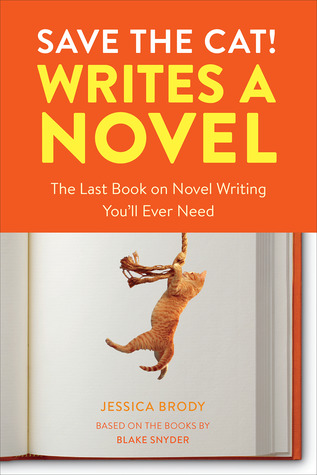
Now, I mentioned a book, didn’t I? Well, Jessica Brody wrote a book about novel writing using the Save the Cat! method. And guess what? I’m damn glad she did!

Here it is:

Savethecat

Indigo

Amazon


It is insightful, helpful and precise. There’s little fooling around, and you’ve got actionable steps, theory and a lot of examples (yes, beat sheets examples, too!) I purchased it a while ago and I cherish it. I can finally immerse myself in this technique instead of simply “guessing” like I used to do with only the beat sheet.

Really, give this book a try if you’re like me, stuck on plotting, saggy middles or don’t really know what to do with those plot and pinch points… It’ll save your novels, too. I can vouch for this!


Jessica Brody’s course

What if I told you there’s a course built around this very book? Well, there is! The author is the one offering this course (we lucky champs!) You can access it by paying a monthly membership fee ($12), and it’s full of resources, beat sheets, examples, and clear and precise explanations by the Jessica Brody herself.

If you’re interested (like I was—I am paying that membership for this course precisely), head over here.


In Conclusion

Wow, that’s a lot! Don’t you feel better and energized by finding more about the Save the Cat! method? I believe it will help you like it helps me—tremendously, every day. Now I feel confident (or at least, less afraid) about my plotting skills, and I discuss the plot of my novels with others in a straightforward way. No more stuttering and losing myself in “maybe” or “I think they’ll do this, but I’m not sure”, etc. The doubts and hesitations about plot are easier to overcome.

I encourage you to try out this proven, successful method. It’s highly rewarding.

Remember: trust your centre and have fun!


**Please note that this article contains affiliate links. I earn a percentage if you purchase said item through my links, but it doesn't cost you a cent more! It's all free for you. Thank you very much!

How to Read More Pleasantly

Introduction

Hello, folks!

Reading in itself is already fun, but what if we could make it an even more pleasant time for ourselves? There are ways I found which can accomplish that. How about I share them with you so we can all enjoy reading even more?

Here’s what I love to do.

I hope you pick a few to try them out and find more pleasure in reading.

If you're interested in learning strategies to read more, you can find them in my article How to Read More This Year


Reading Socks

I discovered these on Indigo about a year ago. They are pricey, but so gorgeous and they look super comfortable! Since I didn’t want to pay that price, I told myself I would go on a quest to find a cheaper, but as cute and comfy pair of reading socks.

Then, I stumbled upon a cute kitty pair at Ardène and fell in love right away. They were 12$, cushioned and adorable. What’s not to love? Obviously, I took them home and tried them on with a book in hand.
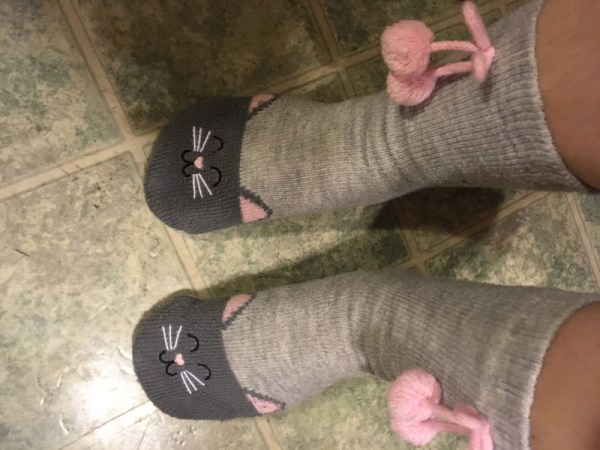
IMG_1291

(Copyrighted Catherine Girard-Veilleux, 2020)

Let me tell you that it’s what I call bliss: a good book in hand (hopefully) and cozy reading socks! My feet were warm, and I felt all fuzzy, comfortable. I was genuinely happy and content all around.

Since then I forget that I’ve crossed the time limit I gave myself and just… read for hours. Due to my job as a translator and editor and serious health issues, I’ve got little time to read. But I swear the reading socks make me read longer! That’s how great they are.

Get a pair for your own sake!


Candles

This one is particular. I haven’t tried it yet, but I yearn for a good scented candle while I read. There are even thematic ones based on your tastes (like the scent of an old book), stories (Charles Dickens’s or Harry Potter’s), characters (Katniss Everdeen or Clary Fairchild), and so on. Seriously, I want one of those!

I’m a big fan of dinner at candlelight. Whenever we lose power, I’m so happy because I spend time under the candlelight; it imbues the air with mystery and a cozy sensation, which I crave. Hygge, here I am!

If you can, try this tip. You’ll smell a good scent and it’ll put you in good spirits to read. And bonus points if you turn off the lights and read at candlelight, all the cozier for you!


Bed/Cushions

I’ve got the habit of reading when I go to bed, either with a physical book in hand or on my Kobo. It’s the only time I found to read, so I take it!

I’ve noticed how fun and comfortable it is to read with an eReader in bed: you’re all wrapped up in your bed sheets, warm and tranquil. It brings peace of mind, or at least you’re just feeling calm and happy to read. If you read in the morning or during the day, try it a few times in bed, too. You might just enjoy it! If not, no worries, just go back to mornings and days, haha.

As for the cushions, this is a long story which I’ll make short. Whenever I read with a physical book in my bed (do you notice a reading pattern? Haha!), my back and arms hurt so damn much! So I keep changing positions until I’m so annoyed and tired I stop. It’s sad because more often than not, I stop reading not because I’m done reading, but because I’m aching all over. I found a cushion with arms I thought I could put against my bed wall and read with no aching.
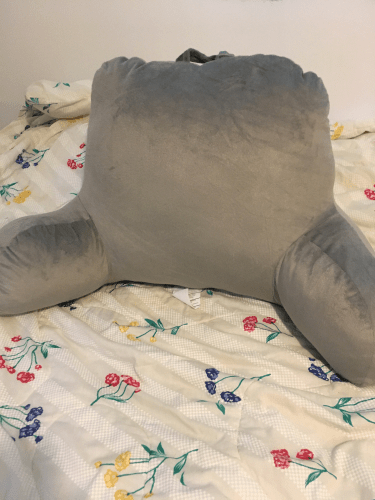
 

IMG_1289

(Copyrighted Catherine Girard-Veilleux, 2020)

Fortunately for me, I received it as a Christmas gift! (Thanks, mom!) I kept complaining about how I couldn’t read as much as I wanted in bed… So, I tried this cushion with arms and joy to the world, it works! My lower back still aches a bit, BUT it’s overall very comfortable and I don’t have to switch positions anymore!

Want to hear the best part? I can read for how long as I want with this cushion, no need to stop because I’m sick and tired of the pain!

If you’re having similar issues or just want more comfort, please try such a cushion. It will either save your reading time or upgrade it.


A Clean Space

This might sound obvious, but a clean reading space will bring you more joy. If you’re stuck tight between boxes, objects and so on, you will grow annoyed and angry and will stop reading-or at least it will be miserable.

I suggest cleaning three feet around you so you feel like your personal bubble isn’t invaded and have all the space you need to settle comfortably.

I know cleaning’s not so fun, but this is a genuine trick. A messy place can ruin your pleasant time by turning it into a lame experience as you keep thinking about the mess and how squeezed you feel.


Plushy Friends and Accessories

Now, this tip is not for everyone, but I know a lot of us love cute character plushies and Pop! figurines and other merchandise of our favourite stories and characters. I’ve got a few plushies (Wonder Woman, Harley Quinn, Hermione, etc.) and Funko Pop! toys like Jasmine, Mr. Burns, and Aladdin. I’ve also got a big Elsa cushion.

Okay, but what does it bring us to? Well, remember the clean space I mentioned above? Clean it, then choose which accessory and plushie you want near you while reading. It’ll make your space even more personal and you’ll appreciate it even more as you read, surrounded by what you love.

It might be silly sounding, but it genuinely works and you’ll feel good, safe even.

And who doesn’t want a safe reading haven?


In Conclusion

Whether you choose a candle, cushions, reading socks, or accessories in a clean space (or all of these!), I’m sure you’ll find your reading time optimized and more pleasant.

It’s all about treating yourself well and finding things you love which make you feel at ease. That way, reading will be a breeze and you’ll wonder where time went.

I wish you a good reading!

Please leave me a comment about what other tips you find useful for better reading times. I’d love to discuss those with you.

See you next post, lovelies!
How to Read More This Year

With the New Year beginning and a sweet new decade, how can we succeed at our goal of reading more?

I have structured this article according to two main reading patterns. The first readers are what I call the “Hoppers”. I’m part of them without a doubt! Hoppers will read several books at the same time, gleaning one for an hour or two, then switching to another one the same day or the next day. We take a while to finish a book because of that, but there are solutions to finishing more books, which I’ll go over in this post.

The other readers are the “Dedicated”. Why do I call them like this? Well, they are dedicated to one book and one book only when they read. They won’t switch books until they’ve finished reading that one. Obviously, they finish books more rapidly than the Hoppers, but there are still solutions to implement to read more during the year.

Now, shall we take a look at how to achieve this?


For the Hoppers

Surprisingly enough, the methods I tried which worked aren’t the ones most people will tell you to do: focusing on one book at a time. Why? Because we just can’t do it! Gosh, that’s why we’re Hoppers! It lacks diversity and surprises. Okay, but what actually works? Well, my friend, I’ve got an answer for you since I’m a Hopper too (hello fellows, if you’re one!).

The solution I found to deal with the increasing number of ARCs I received and books I bought is to trick myself with some structure. I said structure, not focus. Here’s how it works:

  • You pick three books (ARCs included, though I suggest one or two, not all three) that you want to hop to and from.
  • Pick two books that you’ll be able to hop to only when you’re sick and tired of reading the three others.
  • Look at how much time you can read per day, then divide it by three.
  • Finally, jump freely between the three chosen books from the beginning according to the divided time. Remember: it’s in the order you choose!
  • If you’re growing restless because you’re “always reading the same three books”, fear not for you had chosen two rescue books! Pick one and read, then go back to the three you chose first the next day.

It’s a funny system, but it completely works with me. And I’m quite the Hopper as I can read 15 books at the same time… But this system that I built from trials and errors has helped me review more books and read more in general.

Trust your Hopper friend (that’s me).

Tell me in the comments if you think this is a good idea for you or if you’ve tried it! I’d love to discuss this trick with you.


For the Dedicated

Let’s be honest here, since you’re a Dedicated person, you finish many more books than Hoppers. So what could possibly improve this situation? It seems impossible.

Well, I may have an idea: better time management, if possible. Due to our busy lives, it’s not always easy to make the time to read. I’m pretty sure you’re reading in-between meetings and a short time either in the morning or in the evening. Perhaps you’ve got an hour in total, which is good. But what if you could squeeze in fifteen more minutes, half an hour or more?

Here are my suggested steps you can take in order to free up some time for more reading:

  1. Take note of what your typical week looks like with everything scheduled.
  2. Observe how much reading time you have.
  3. Then, examine which activities might not be priorities for you (let’s assume reading is one priority).
  4. Identify which activities you could either remove or shorten in their duration.
  5. Apply the shortened time or removal, and try to read during this newfound time, to see if it fits you better.
  6. Enjoy reading more books!

P.S.: If this doesn’t work, try switching for different activities to shorten or remove. Perhaps the ones you cut out were actually more important than you thought. Don’t let go, you can do it!

In Conclusion

Whether you’re a Hopper or a Dedicated reader, there are ways to optimize the amount of books you read. It can be through tricking yourself in reading fewer books at the same time while still maintaining that “free roam” feeling, or it can be through better time management. I know you can do it! May your new reading year be full of achievements and pleasure.

I hope these solutions have been helpful.

Please do leave a comment about what type of reader you are and what you think of these tips. I’d love to discuss this with you!

See you next post!

How An Authortube Video Helped Me Win Against (Severe) Writer’s Block 

How An Authortube Video


I watch YouTube a lot (guilty as charged, dang) and love to learn through tutorials and how-to videos. I didn't venture into book reviews BUT Authortube caught my eye as an aspiring author myself… And I must mention Miss Kate Cavanaugh is my new obsession (Whoa! I mean in a "I'm watching all of her videos non-stop" and not like a creep, okay? Okay!) 

Most importantly, she just saved my Heaven's Army: Down to Earth series with one of her methods. 

How did she contribute to saving my cherished story? 

And also, why do I appreciate Kate's videos so much?

I'll first list all her qualities and what makes her videos the best, in my opinion. Then, I'll introduce you to the specific video which helped me and what I realized and what I proceeded to do. Lastly, I'll explain how it works and what's new on the horizon for me and my story as well as this seemingly innocent technique. All interspersed with images and wishing Miss Cavanaugh the best (and please, do make other awesome videos so I can binge-watch them, oki-please??)

Ready?

What About That Kate Cavanaugh?

I'll be blunt here: her videos are the best and the most inspiring I've found because 

* She's hilarious both in what she says and how she edits her videos

* She's so lively it's sweet and entertaining and cannot not move you into action (talk about motivational!)

* She finds different angles to tackle the eternal struggles for writers and explores various methods

* She has an amazing series where she writes like a famous author (using their own routine!) and it's both extremely funny and useful to see what works and how you can tailor it for you!

* She's honest and kind and enthusiastic

* Kate deals with writers's problems, her own progression, tips and tricks, "I tried writing like…", honest talks about writing and money (and so on), and amusing topics like "Sh*t writers thinks // Coffee Shop Edition".

If after such compliments you still don't want to take a look at her videos, you… Who the heck are you, then?! (Just joking. Nah.)

The Life-Changing Video

There is one video that affected me more than the others in terms of resounding with me and the potential technique. If there is one thing you need to know about me before I go into explanations, it's that even though I read eBooks and own three ereaders, paper is always the best (and it smells SOOOO enchanting). 

So, what video am I talking about, the one that changed the course of my problems with Down to Earth and helped me beat writer's block with this story? 

Well, here it is:

And the Lightbulb Was Turned On!

As for the issue with my story, I was stuck. The plotting never seemed good enough, and I’d had terrible feedback and gratuitously mean comments. So, nothing I ever did worked (plotting and character-wise), and I was pretty hurt. So, sadness took over.

I spent months working this issue over…. Okay, I’m lying. Years. But then, a week ago I watched Kate’s video and it hit me!

I have to print the goddamn story like a book (or at least, as professional-looking as I could right now)! And I did. Like she says, it doesn’t cost much (it was $32 for me at Staples) and it looks GORGEOUS what with those white spirals, protector sheet and hmmmmm all those sheets with written words on them. My words.

DSC00822_WIP_Down to Earth Manuscript


While it’s beautiful, do you want to know what’s best about it? 

It works!

The Innocent-Looking But Powerful Technique 

It might not seem much and you’ll probably go “Well,

Duh
You just had to print it to advance.’’ 

But nah uh! Printing it out is only half of the issue solved. What makes it work is having it look professional and not just sheets you took out from your home printer and stapled together. The answer lies in its appearance and practicality. 

Okay, sure, it’s easier to do with your home printer. But it’s less striking, and most importantly, less inspiring. And that’s the trick. You need to hold your story (completely drafted or not) and feel closer to your goal. You need to look at it and go: “Wow, I did that?!’’ With the protector, colour cover and spirals, you’ll feel it’s going somewhere and, I hope, have your confidence renewed! Desire and drive to get somewhere with that story will come at your beck and call after that!

“But what did it give you honestly?’’

Well, since you asked, I’ll answer it in the next section!

I See the Horizon!(And Glimpse at What It Holds)

I envision my completed novel, at last. The feel of just-printed pages and the smell of just-fresh ink. And at last, written in big, bold letters at the very last page: "The End".

This might be in a little while, but now it's much clearer and tangible for me. I see and feel it. I *know* I will reach that vision.

And in the end, isn't it what counts?

Thank you so very much to you for reading and to Kate Cavanaugh for inspiring me with every upload. Please go and check out her channel.

What tip have you tried and loved?

Is there any you learned through Authortube?

See you next post, lovelies!

The Woe of Self-Esteem and Confidence (And How to Beat It!)

Hello, everyone!

This week's writing tip is all about self-esteem and confidence… two hard concepts to keep when they grace you with their magic. However, I have a tip and a real story to share with you about how to get confident and raise your level of self-esteem. Ready?

Let's get started!

The hardest thing to do when one wishes to write is actually sitting down and writing something. But let me tell you that

a) you will NEVER grow your confidence if you don't write. At all.

b) in order for your self-esteem to rise, you need to stop making excuses and find the time to write – you shall feel much better afterwards. You'll see. It's a step in the right direction.

I know, I know. Life is crazy fast. So how does one sit down to write when we have to wash the dishes, etc.? The answer is as simple as it's hard to apply: Make writing your priority. I kid you not. I've been reading how-to books on writing and they all say the same thing. Guess what? They're right. I've been trying it the past few days and my NaNo Prep improved. 🙂 I am now into world-building. It's quite impressive being at that point taking into consideration that I only had a concept for the story two weeks ago. If you don't make it your priority, you'll feel bad and guilty for not writing, which is the exact opposite of how you should feel for your self-esteem to rise!

As for confidence, I have a little story to tell you: This week, I wrote a flash fiction for a contest and posted it on Scribophile for reviews. For the second time in my life, I received a terribly negative review, which came as a shock to me (I'm not used to receiving poor feedback, my stories usually being great). I was hurt. Sincerely. My confidence in my writing took a step back… but then, something awesome happened. Three other people reviewed it afterwards. Their reviews were good and constructive. It made me feel better and more confident.

Moral of the story? Believe in what you can do and share it. If you don't share it, how can you know people will actually like it? You can't grow your confidence by keeping it a secret… Yes, sometimes it hurts like hell, but other times (and those are the important ones) it's as sweet as honey and crucial (as they give you constructive reviews).

You see, confidence isn't a straight line. It's more like a roller coaster. Aim for the climb at the summit, though be aware there will be hurtful going down. When you're at the top of the roller coaster, analyze what got you there. Then cherish it. Write it down, if necessary. This way, during rough times, you can look back at it and know how to work on your confidence.

Did you know that James Patterson, bestselling author of 76 novels, got rejected 31 times when he was starting out?! It's not because a certain someone, professional or not, dislikes your writing, that it is bad. Other people will see something good in it; thrive on this! And improve what you can. It's the only way you will grow your confidence. By sharing your work and becoming vulnerable. It's unpleasant, I know. But it's worth it in the long run.

Self-esteem and confidence are friends of your writing and sharing. It comes hand in hand with them.

I wish you all the best with your writing.

If you have questions about today's tip, ask me in the comments below!

On this: Just write!  

A Discovery of Writing Wealth

Hello, fellow adventurers! Yesterday, I was looking for more information about the writing craft. Perhaps I was hoping to find a book that wasn't so expensive or a few online articles from trusted sources… but I hadn't expected to stumble upon podcasts.

music-1059115_640

Now, I knew what a podcast was and I doubted listening to celebrities talk about their life and such would help me improve. What I did not know was that I had listened to the wrong podcasts a few years ago!

Let me explain: I thought podcasts were only by celebrities (from the music industry, the movie industry, etc.) and book reviewers. Why would I want to listen to that? I mean, it's good if you like this stuff as podcasts, but I don't. I was looking for something to help me improve my writing craft.

The first writing podcast I found is I Should Be Writing (ISBW) by Mur Lafferty. Since I don't have the money right now to buy her book I Should Be Writing: A Writer's Workshop, I figured I could glean some information via her podcast. And it did not disappoint! So, of course, I opened iTunes and subscribed.

Then, I looked up other writing podcasts. Just so you know, it felt like bliss because I had just found that podcasts could actually teach you important stuff instead of just wasting your precious time!

Here are the two other writing podcasts I found that are worth subscribing to:

They have a wealth of information and tips on the writing craft and also how to be an indie author in our years. I encourage you to at least try them.

Go on, listen to one episode and see for yourself!

Did you know about writing podcasts? If so, which ones do you like to listen to?

If not, what other free writing resources do you use?

See you next post, lovelies!