Tag Archives: book influencer’s life

The Day I Left You by Caroline Bishop: A Book Review


Caroline Bishop's Website

Indigo

Amazon CA

Goodreads

LibraryThing

Fable


Genre: Historical fiction, Women's Fiction, Romance
Number of pages: 368
ISBN: 9781668047279

ASIN: B0CL5FNMF3

Format: eBook (Kindle),  Paperback
Publication date: February 18, 2025
Publisher: Simon and Schuster Canada
Type: Novel (Standalone)


A BIG thanks to Simon and Schuster Canada and NetGalley for an e-arc of this book! I receive no compensation whatsoever, and I write this review willingly.

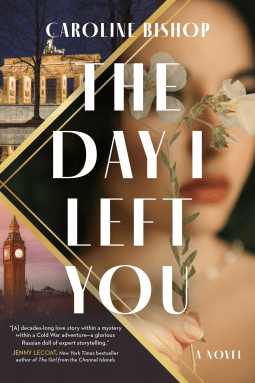
The cover is so pretty and elegant, but I admit it was the title that got me. The Day I Left You, hmmmm, so intriguing, and clearly romantic. Curious, I went to read the blurb, and saw it was about an East German woman leaving her British husband abruptly in the time of the Berlin Wall and Cold War. Say no more! As a huge historical fiction lover, this sounded like my cup of tea! (yes, British… tea… I made a tiny pun, see?)

Honestly, it was my cup of tea!

And if you want to know more, it’s perfect because I’m here to spill the tea!

Just keep reading, loves!


Blurb

For readers of The Secrets We Kept and Jill Santopolo comes an epic love story about Greta and Henry, who by chance meet in 1982 East Berlin and find a love that’s meant to last a lifetime—until Greta vanishes.

I’m sorry. I can’t stay.

East Berlin, 1982. When Greta Schneider meets Henry Henderson, she is instantly smitten. An engineer on a work visa from Britain, Henry offers Greta a taste of the world beyond the Iron Curtain, a world that she yearns to explore as a translator once she finishes university. For Henry, Greta is simply perfect—bold and beautiful, her lively and inquisitive nature adding a vital spark to his everyday life.

But their time together is limited. Henry can’t stay once his visa expires, and Greta is forbidden from going beyond the Berlin Wall. It’s only been a few weeks, but they know how they feel about each other, so when Henry proposes, Greta accepts—and is given permission to start a new life with Henry in England. And for a time, everything is perfect. Until, one day, out of the blue, Greta walks out the door of their Oxford home, leaving a simple note behind.

Decades later, Henry still has unanswered questions. Greta loved him, and he loved her. They surmounted the odds to be together, and in his heart, he knows their marriage was happy. So why did she leave? How well did he really know his wife? When a young mother visits Henry’s antique restoration shop, she unknowingly brings with her a clue that sends Henry on a journey to find out what happened to the love of his life all those years ago.

Set against the backdrop of the Cold War, The Day I Left You is a gorgeous, spellbinding story about the nature of love, the memories we cling to, and the hurts we must leave behind to move forward.


The Positive Points

This book is heavy on love and how to go through grief and abandon, as well as how to find yourself and happiness again. It’s sweet. I had the impression this story is a quest for answers and love, and for love. It’s not a coming-of-age story, but it’s one of coming into your own person as you grow older and try to find answers and deal with grief. An interesting take that I rarely see.

The Day I Left You felt much like life. A tale of life, it felt while reading it. It was as though Greta and Henry were at a coffee shop with me, telling me their stories. I loved it!

Something fun is that I love how we see two different ages: when they are young in their twenties; and then in their sixties or so. It’s a real change from only twenty or forty years old in most adult novels. I love this! Also, I love that the present is told in third person, and that the past with Greta is more personal in first person, like we must feel her and understand her more deeply to make sense of her decisions and actions. For it to have the right effect on us, and it does, I can assure you that. And awwwwww, Part 2 really surprised me with a new and modern POV! I wondered if we’d get to see that aspect of the story, and we do! But no more, because no spoilers ;).

I felt like the surprises kept coming and it’s all so much more intricate and entangled than I saw at first. And much deeper, too. Wow! Plus, Greta’s reasons for leaving are totally understandable in her situation. I feel for her. And it shows all the ramifications of the Cold War, too…

This story fits the expression “all in due time” in several ways. I hope you’ll see for yourself. In the end, it was a very rewarding read. It resolves pretty nicely for both of them in very different but plausible ways.

What impresses me is that the structure of the book is so well done; everything makes sense and flows properly. All the chapters fit like building blocks put together correctly. The overall structure follows the internal structure—I mean that while the characters gradually deal with what’s happened between them and the Berlin Wall falling, the overall structure of the chapters and the different POVs reflect that perfectly! It’s a work of art so neatly weaved together, bravo!

My first impression was that the prologue is very gripping and intriguing. Why does Greta have to leave if she doesn’t want to? What’s in her past? It’s emotional too, although the use of the “you” POV for her lover surprised me, but it’s good—it’s more immersive in a way. It is personal, the prologue and the Greta’s chapters in the past. And not because the first person POV in Greta’s past, although it helps, but because of the way she describes her lover and her actions. There is a proximity, a certain closeness in the way she describes things. Like it shows she cares and loves.

Moreover, it’s really fun that we get to see both POVs. One in the past Greta, and now modern Henry. Wait until for a surprise modern POV later… It all adds a little something of enjoyment to the story.

I noticed some language tricks. For example, there are psychological tricks, like how telling a lie or anything in another language feels less committing. I love such details about the complexity of the human mind and heart! In addition to this linguistic aspect, I enjoy that some affectionate words are in German, and product names like wine or celebrations, as well as a few swear words and expressions are in German. I think it’s fun to come across these words and it helps with immersion in Greta’s world and memories. And as a polyglot, I always love to see languages sprinkled in stories.

Now, what about the characters? Honestly, I enjoyed my time with them! I’ll start with Henry because he’s the one I felt for the most. He is so romantic and cute in his feelings for Greta. A lovesick puppy; I want one like him! Henry is lovable and endearing because he thinks about others and injustices, and also, he is calm, intelligent. He is a kind and good soul, it’s lovely. I also find interesting that Henry is a furniture restorer. It’s very different and little heard of in stories.

Lucy Kenny! Ah, my favorite character of the story. I really like Lucy and her rambling and her energy. I really love Lucy Kenny, she reminds me of myself, haha! She’s so proactive, helpful, and kind. And most of all: she’s a real chatterbox with a lot of energy! Can you see that in my writing? I hope you can! Plus, I like that Henry and she develop a sort of friendship, it’s rather cute!

I also really like Ros, Lucy’s mother. She’s funny and down-to-earth and lively as well. I also enjoy her views and opinions on the children and her ex-husband who’s her best friend.

And Greta? I like her; however, sometimes she made me feel sour with her. She is intriguing and interesting, and her dreams and hopes are perfectly valid. Greta, I think, did the best she could with what she had to deal with, honestly. I can’t say any more—I don’t want to spoil the story for you! But know she had her reasons and tried her best in her situation.

As per the story, I love how Greta’s homesickness is tackled and described because it must really feel like that. And also, how everything is not perfect or necessarily greener in Britain than in the GDR (German Democratic Republic). It’s interesting to see that and natural for a young woman raised in East Berlin with the wall to see positives to her old life and be homesick while feeling lost and lonely in Britain and not liking everything like capitalism and always being short on money. The character also said that you’re as free in the West as your wallet allows, and it couldn’t be truer (unfortunately). She feels disconnected from life in Britain and in the West in general. Understandably so what with her background of different experiences under communism.

Henry and Greta both evolve as individuals. For Henry, it shows through his gradual openness with Lucy and her family and his realization that his repair work must not be perfect and still show some scratches and scuffles of life and love. He’s grown into his own after so long, poor guy. And Greta is finally confiding in someone and finding her own happy ending. I’m glad that in the end, Henry somehow gets a family he longed to have, albeit a bit differently than how he’d thought he’d have one. It’s funny that it’s through his search for Greta though, but I am glad. Henry deserves the peace and happiness, and a family of his own in a way. It’s cute. And he also needs a dear friend like Lucy.

I am rather pleased that the author, through Greta, explains how and why there is the Berlin Wall and how they got it with state socialism. It is very interesting and informative. And yes, she also explains what the Stasi are and their dangerous (if not deadly) surveillance. I had deducted it, but it’s good to have a better definition in Greta’s words.

I’m so into it. My emotions are gripped. It’s so poignant and I keep being outraged at what happened to Greta and the threats, and I keep telling my mom all about it in a flurry of emotions and indignation. It’s really good when I’m so gripped emotionally.

While I had an inkling of what Greta’d become, it became freakier as I kept reading! It was very gripping emotionally and felt like a whirlwind of intrigue and difficult choices. I am glad I got to read this book before publication-I had quite the adventure with it!


The Negative Points

The biggest point is that I found it so slow. For a book with such a huge question to answer (why did she leave so abruptly?), it’s really slow-paced, which makes it less thrilling than I thought it’d be (at least for the first half of the book). It’s still interesting, but it seems to take forever to receive a new “hint” at what might have happened. Ah, those hints trickled down every 4-5 chapters or so! They had me rolling my eyes a few times because they’re so few for a long while. (They’re exciting, but still!) After 50% of the book, it the pace picked up admirably and the intrigue took me in like a whirlwind, I’ve got to say!

Also, it annoys me that the person being left is always the one who suffers the most, huh? It shows in this book as well, I noticed… It’s not that I dislike Greta, it’s just unfair for Henry who’s been stuck on her since she left, and because of how she left. While Greta has her nomadic life and a new love… It makes me sour a bit towards Greta, oh well. However, towards the end, I understood more how it’s also been cruel and hard on her. It’s just she seems to move on so easily… But I guess she didn’t have much choice, did she? And that’s a problem: she never really did have a choice in the end.

Lastly, the necklace a certain Lucy wears from her mother is quite an intriguing and effective way to deepen and twist the plot a bit. It would have been more effective, however, if we’d known before that that Greta loved to make jewellery or at least more than implied. Because it’s a good moment, but it lacks a bit of the shocking effect as a reader.


In Conclusion

All in all, I give The Day I Left You a feelsy rating of 4 stars out of 5. Despite its slow start, I ended up loving the book and enjoying my time with the characters while learning more about the intricacies and ramifications of the Berlin Wall and the Cold War. Plus, if you enjoy slow-paced books, it’ll be a perfect read! I strongly recommend this book to anyone remotely interested in the Berlin Wall and the Cold War, as well as historical fiction lovers. To those who love their books with a good dose of intrigue, mystery, and surprises. Also, I recommend it to those who love a good book that gives you feels and grips your emotions tightly, and feels just like you were out for coffee with friends to hear their life stories.

Quatre

If you want to learn more about the author, Caroline Bishop, you can visit her author website and follow her on her Goodreads Author account, as well as her Instagram account. Don't forget to add The Day I Left You to your wishlist, your cart, or your bookshelves!

The Conjurer’s Wife by Sarah Penner: A Book Review

Cover499146-medium


Sarah Penner's Website

Amazon CA

Goodreads (Add it to your bookshelves!)

LibraryThing

Fable


Genre: Fiction, Fantasy
Number of pages: 40
ISBN: 9781662526213

ASIN: B0D6RSVHLR

Format: eBook (Kindle),  Audiobook (Audible)
Publication date: January 01, 2025
Publisher: Amazon Original Stories
Type: Short Story


A HUGE thanks to Amazon Publishing and NetGalley for an e-ARC of this book! I get no compensation whatsoever, and I write this review willingly.


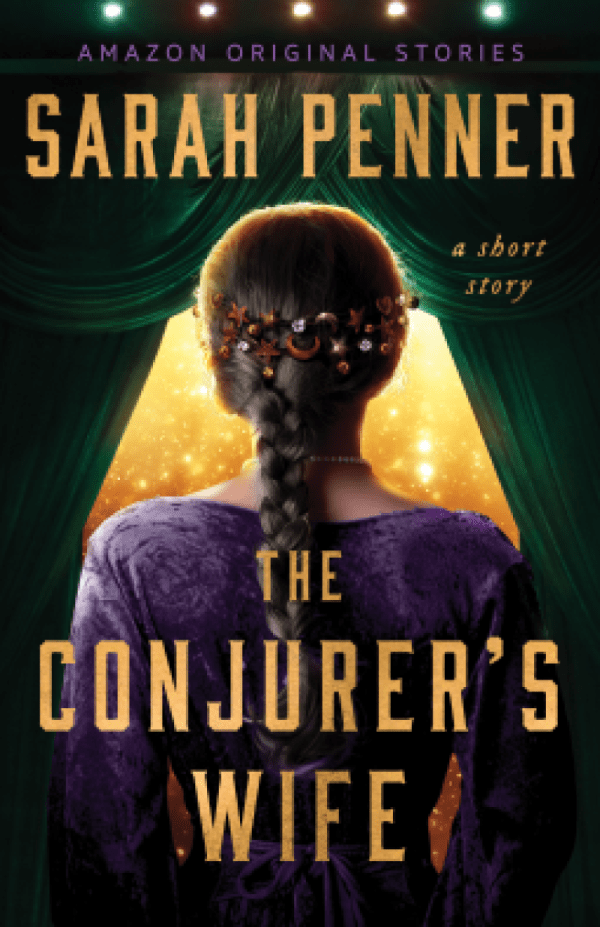
The delightful cover which spoke of spectacle and ancient times what with the clothes and braid of the woman really caught my eye. But what intrigued me was the title, The Conjurer’s Wife! A conjurer? Interesting! And his wife… She’s clearly much more than what she appears to be at first.

I had to read this short story by Sarah Penner! Not only does it occur during the 19th century, but also in Venice, with a backdrop of illusionism and spectacles. I love everything magic and that relates to the arts of the scene.

So, I was kindly granted a digital copy, and honestly I read it so fast. When I had to do something else, I would keep thinking about the story and Olivia, the main character, until finally I could resume my reading.

This sounds like your cuppa too?

Keep reading, loves!


Blurb

In nineteenth-century Venice, a young woman’s marriage to an illusionist hides secrets that go deeper than his spectacular acts. The stage is set for transformation in a mesmerizing short story by the New York Times bestselling author of The Lost Apothecary.

In 1820s Venice, world-renowned magician Oscar Van Hoff confounds sold-out crowds with his astounding manifestations. Even his beautiful wife and assistant, Olivia, is mystified. Her job is to smile and recite her lines—onstage and in society. But the thankless routine is bringing out her rebellious side. Then, on the eve of what promises to be Oscar’s greatest performance yet, Olivia uncovers a secret with the power to shatter all her husband’s illusions. Now the finale belongs to her.


The Positive Points

The prose is straightforward and includes much information in short sentences and fewer words than one would think. I love it! You know all you need to in a swift and direct way. The descriptions are succinct, yet they tell everything you need to know: like how common the clearing of throat is before a show as a spectator, and how the theatergoers are drunk, notably before it happens in the holidays and on a Friday evening. The author doesn’t shy away from less-than-agreeable truths and descriptions, and I appreciate it.

Also, I love the integration of gaslight system which is from that time period—it is accurate and well-thought of.

Plus, you can feel the tension between Oscar and Olivia right from his entrance! He doesn’t seem wholly good… what has he done in the past? It seems Olivia thinks it’s high time for a little rebellion of her own. I am intrigued about what truly happened to Olivia before the injury and what Oscar might have done to her… used her for his shows? Lied and manipulated her to wed her?

As I kept progressing in my reading, something clearly didn’t seem right about this whole thing and Oscar, was Olivia the magician before and then he met her and used her talents to become popular? Maybe he stole magic by causing her head injury… Argh, I didn’t know, but something was definitely wrong in this picture! He seemed to have no trick to his shows… which as a magician is highly improbable! Almost impossible. So what gives?

I love the scene with Olivia and the painting. It is much more important than we know at the moment!

Omg, the plot twist was great! I wasn’t expecting that plot twist until the very last minute. Fantastic and chilling at the same time. A grand number in the author’s show! The ending is excellent and rebellious—just like Olivia in the beginning. dang how I love her character! I would read a whole book about her.

Lastly, this short story reads like a show. I mean, it’s like I am watching a theater play or a tv show—it’s really entertaining and captivating.


The Negative Points

How can she be sure that thing (no spoilers here) is magic? She simply assumed when she saw it. Perhaps Oscar plans his shows with it? This would be more logical than assuming it’s magic right away. This seemed a bit illogical and it bothered me, jumping to conclusion like that—the right one at that, and much less plausible than anything else!


In Conclusion

Overall, I give The Conjurer’s Wife by Sarah Penner a grand rating of 5 stars out of 5 for how excellent the storytelling is, how captivating and engrossing the story is, and also how much I love Olivia as a character and the amazing plot twist! Honestly, I would really read a whole thick book about Olivia! This story is genuinely that good.

I recommend this short story to all lovers of magic in all its forms, art, and spectacles, as well as those seeking to be captivated by a story and characters and taken aback by a plot twist cleverly crafted!

Cinq

If you want to learn more about the author, Sarah Penner, you can visit her author website, and follow her on her Goodreads author account, as well as on her Instagram account. Don't forget to add The Conjurer's Wife to your wishlist, your cart, or your bookshelves! 
Vilest Things (Flesh and False Gods #2) by Chloe Gong: A Book Review

Vilest things


Chloe Gong's Website

Simon & Schuster's Author Page

Indigo

Amazon CA

Kobo

B&N

Goodreads (Add it to your bookshelves!)

LibraryThing

StoryGraph

Fable


Genre: Fantasy, Sci-fi, Romance, Adult, Retelling
Number of pages: 372
ISBN: 9781668055014

ASIN:1668055015

Series: Flesh and False Gods (#2)

Format: Paperback, Hardcover, eBook (Kobo, Kindle, Nook), Audiobook (Audible, Kobo, B&N, CD)
Publication date: September 10, 2024
Publisher: Saga Press
Type: Book, Novel, Series, Sequel


*A HUGE thanks to Simon and Schuster Canada and Saga Press for a physical galley of this book! I get no compensation whatsoever, and I write this book review willingly.*

Fun fact: When I requested Vilest Things by Chloe Gong, all I knew was the blurb (which grabbed my interest right away!) and that it was a retelling of Antony and Cleopatra by Shakespeare. Honestly, I had not read the first book, Immortal Longings, but the description of Vilest Things captivated me so much I asked for it and I am fortunate enough to have been granted a physical galley of it! So, of course, I rushed and purchased a copy of Immortal Longings to know what happened prior to the second book. I was NOT disappointed, as it shows in my bookstagram review.

But what about Vilest Things?

Well, I was pleasantly surprised, and while it was different than the first book, it was nonetheless a great read!

Want to find out how so?

Just keep on reading, loves!


The Positive Points

The characterization in this book is excellent! Calla is not becoming a better person per se, but there is some character development to her. She is softer with orphans now and kids (who clearly remind her of when she used to be one), and she has a bit more trouble maneuvering the twin cities from a high standpoint since she reintegrated the royalty. It’s also interesting to note she admits to be at ease with some people while she would never admit this in the first book. She’s still not likeable person, yet she is as interesting as before, if not more as we discover more of her personality and past.

The angst is angstin’ so much in Vilest Things (even more so than in Immortal Longings, the first book)! There is such pressure on Calla and Anton, and between them, wow! The tension, ish! It’s chef’s kiss, so deliciously painful.


There is the truth. There is her pulsating heart, pulled bloody from her chest and harvested for the threads of deceit she wove into it herself. – Calla Tuoleimi (p. 57, Vilest Things)


The angst between Calla and Anton is strong in this story. And I love how it’s mostly Calla’s fault for it all, and that she admits it, at least to herself; this drives the story in Vilest Things, in my opinion.


Calla Tuoleimi has ruined him, so he’ll have to ruin everything in return. – Anton Makusa (Chapter 17, p. 177, Vilest Things)


As for Anton Makusa, this quote explains very well how heart-broken he feels, how vengeful, and how he altered his behaviour due to strong conflicting feelings. He loves her, and that’s part of the problem. So, he wants to take vengeance on Calla by ruining everything… except her, it seems. Because he’s a lovesick fool, and it’s so adorable AND angsty.

The main antagonist is a certain surprise someone from the ending of the first book: Otta Avia. Yes, that one… At least, to me, she seems like the villain throughout most of the book (of course, it doesn’t help that we’re mostly on Calla and Anton’s side as readers). When I learned something important about her though at the end of the book, my perspective wavered: she is the enemy, but for an excellent reason. She’s shrewd, and pulling the strings of everyone (yes, even Calla, and mostly Anton) like a master puppeteer. Otta is a little bitch, and she’s a pest, meddling in things she shouldn’t (or so we think) just for a grand plan of hers we don’t know anything about. Also, she loves to make trouble for Anton and Calla, and kind of puts herself between them sometimes, as well as against them. She’s also dangerous and well-versed in qi feats previously unknown to us as readers and to the other characters. In addition to that, or because of all these reasons most likely, she’s a very interesting character. I love to hate her, you see. It is clear Otta Avia’s got several aces up her sleeve… and so far, they’ve all blown my mind! Just who is she? 😉

On another note, I love that despite Anton having taken August’s place in his body, the author still uses Anton’s name in the descriptions. I’ve read books where the author uses the disguise’s name instead and it’s a bit silly because we KNOW who the character really is, and can sometimes be confusing. So, kudos!

Also, I’ve never read Antony & Cleopatra by Shakespeare (one of his rare works I haven’t read yet!), so I can’t talk much about the retelling aspect of the story. However, I am a big admirer of Cleopatra and what she did to save and help her kingdom. Thus, I noticed something: I love how the author cleverly weaved in Cleopatra’s story into the country of Talin in Vilest Things! It is both fascinating and entertaining, as well as it brings even more depth and intrigue to the story at hand. I can’t tell you how, it would be a spoiler. But remember this while reading the book: it’s about a great queen who was about to lose the war, and knew she had to do something about it.

This sequel really delves deeper into the question of identity. Who is Calla Tuoleimi? What happened to the real Calla, the child who was invaded by the Calla we know? Who is Anton Makusa, the guy who always jumps, never in his own body? Who does that make you when you jump and are not in your birth body anymore? What about it? The question is threaded throughout the book, and is strung tight with intensity, right up until the end for one of the biggest reveals I have EVER read (similar to the shock I had with Maven Calore in the Red Queen series by Victoria Aveyard)!

Moreover, Vilest Things doesn’t read like an ARC. What I mean is that I focus on details and take notes for ARCs to write up my reviews, but with this book I read it like any other excellent book on my bookshelves! I picked it up and read through, it’s so intriguing and engrossing, a lot of times pleasantly forgetting to focus and take notes. So it did writing up this review a bit more difficult, haha, but the reading experience was fluid and so thrilling! It might have been slow in the beginning, but once things get in motion, omg, it’s exciting and pleasantly confusing the more you read because you learn things and connect the dots and it’s astonishing what is happening! Plus, some events occur that I was surprised by since it seems unbreakable rules in the first book. I won’t say which implicit rules, but it’s to do with the characters and their own limits. There were SO MANY surprises in Vilest Things! A captivating read that left me breathless, just like Immortal Longings! Now, when’s the third book coming out?!


The Negative Points

The story is slow compared to Immortal Longings. It takes a long while to truly become exciting and intriguing. It does, but it’s not the big fighting mess of the first book with threats and stakes around every corner. It’s more subtle, and more political. I like it, don’t get me wrong, but since I was expecting it to still be as thrilling with the fighting mess, I was surprised, so it needs to be mentioned. The intensity just shifted—it turned into severe angst between Anton and Calla, the return of Otta Avia, and Anton being the new King under the guise of August. So, like I said, it’s more subtle, yet it grows more intriguing and exciting as you read through the book.

A point that really bothered me is how Galipei, who clearly loves August romantically (I am sure, don’t tell me otherwise!), takes sooooo long to realise that August is in fact… Anton now, because Anton jumped into August. I understand there was no flash of light or anything they stand by as rules for jumping, but when you love someone, you notice how different and weird they sound as another, it seems to me… Yes, he does know something IS off with his August, but… it’s not enough. He doesn’t seem to be really taking action about it or truly trying to seek him out in private (I know he did try, but it’s only mentioned, we don’t see it). This annoyed me because Galipei is not an idiot, and he obviously loves August, so this should be obvious something is wrong with his love… But he acts just a bit different with August, more worried and more distant, as we see in his own chapters. However, he does plan things behind August’s back, which is interesting—but it never mentions that he knows it’s not August, it’s always as though he thinks something is off but nothing more. At last, a great thing is that Galipei now has his own chapters, yay!


In Conclusion

Overall, I give this gripping and exciting read with a bit of a slow start a solid rating of 4.5 stars out of 5! Vilest Things is an excellent sequel to Immortal Longings, and I can’t wait to read the third book! Please please please, will it be out soon?!

Movie gif. Agnes from Despicable Me sits in bed wearing teddy bear pajamas as she sweetly asks to be read a bedtime story. Text, "Pretty please?"

Quatre point cinq

If you want to learn more about the author, Chloe Gong, you can visit her website, follow her on her Instagram account, her Goodreads Author Page, her Tumblr account as well as her Pinterest (you can view her boards for her books! <3). You can even listen to her series' playlists on her Spotify! Don't forget to add Vilest Things to your wishlist, your cart, or your bookshelves!